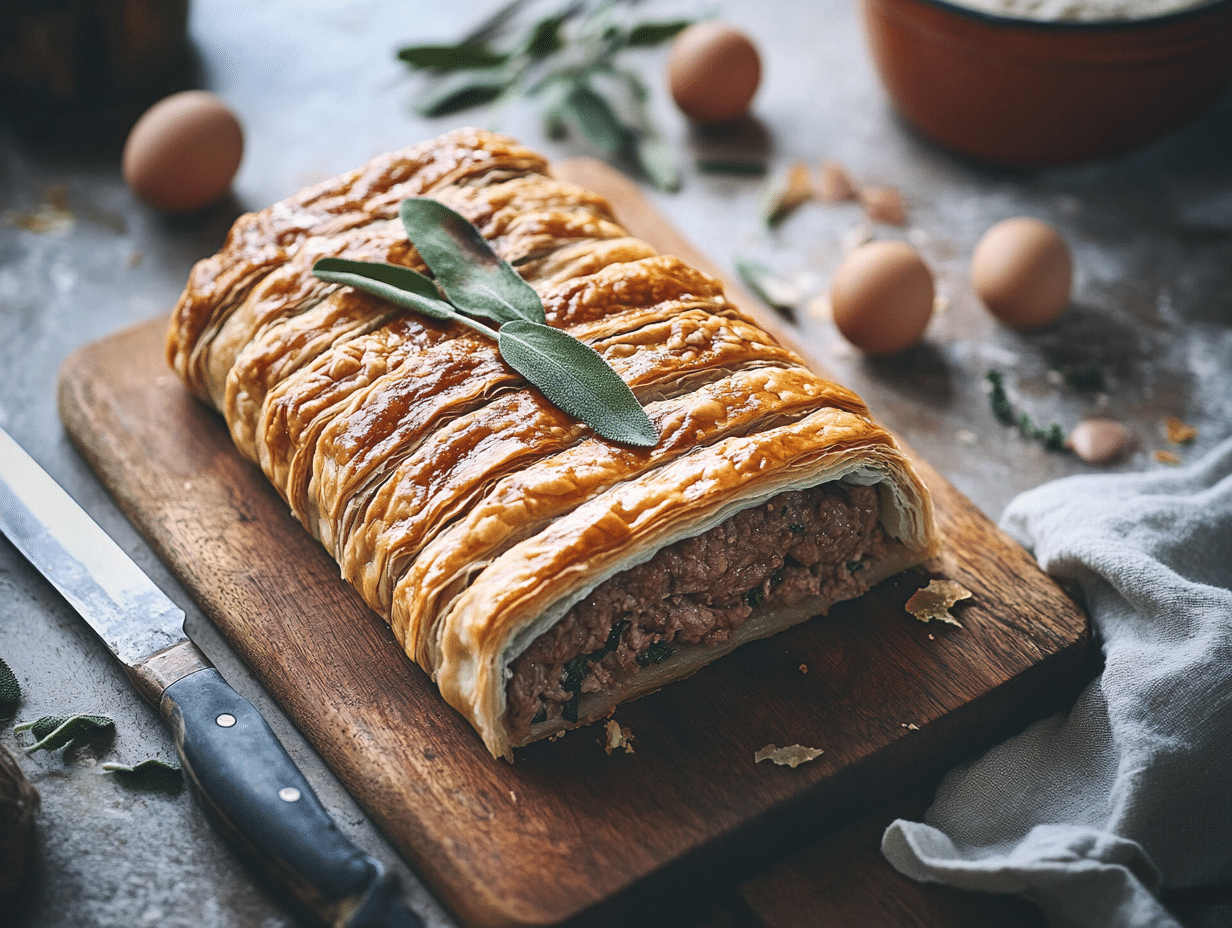
Pork Mince Wellington with Sage is a delightful reinterpretation of the traditional British Beef Wellington, a dish long synonymous with elegance and festive celebration. This version is rooted in classic English culinary tradition but reimagined with practicality and accessibility in mind. By substituting finely ground pork for the famously costly beef tenderloin, and pairing it with sage and Dijon mustard, this recipe offers a flavorful, budget-friendly, and equally impressive centerpiece for the dinner table.
The Wellington itself has a rich culinary history dating back to early 19th-century Britain. Most famously attributed to Arthur Wellesley, the First Duke of Wellington—who defeated Napoleon at the Battle of Waterloo—the beef-filled pastry was believed to match the duke’s sophisticated tastes and name legacy. Over time, the idea of encasing a savory filling in an elegant puff pastry shell began to evolve, making the dish a canvas for regional twists and ingredient innovations.
Pork, in particular, has been a staple in British kitchens for centuries. With its versatility and deep connection to rustic, homely dishes across the UK—from sausages and pies, to roasts—it’s a natural fit for this accessible Wellington variation. In this recipe, ground pork is seasoned with fresh sage, an herb that holds special standing in traditional English cookery. Sage provides an earthy, pine-like aroma that harmonizes beautifully with rich meats and features prominently in British stuffing, sausages, and winter dishes.
Adding Dijon mustard to the mix brings a gentle sharpness and a nod to European culinary influences, while the enveloping puff pastry provides both texture and elegance. As it bakes, the pastry turns golden and crisp, contrasting beautifully with the tender, herbed pork within. The result is a comforting yet sophisticated dish that bridges the gap between weekday dinner and weekend centerpiece.
This reimagined Wellington stands out as a perfect example of how classic dishes can be adapted for modern kitchens without losing the nostalgic warmth and dignified charm that made them beloved in the first place. With a relatively short prep and cook time and minimal equipment required, it’s perfect for home cooks who want to serve something memorable and joyous without the stress of complex techniques or expensive ingredients.
Furthermore, this dish lends itself beautifully to customization. For added depth, sautéed mushrooms or chestnuts can be folded into the pork mixture, while wholegrain mustard can replace Dijon for a different texture and flavor profile. It’s a meal that feels celebratory yet unfussy, honoring the tradition of the Wellington while opening it up to contemporary lifestyles.
Whether served at a holiday dinner, a winter weekend gathering, or just because, the Pork Mince Wellington with Sage brings a deeply satisfying blend of savory taste, crisp texture, and visual appeal. It embodies the rustic elegance of British cuisine while showcasing the magic of simple ingredients elevated by thoughtful preparation.

Pork Mince Wellington with Sage

Equipment

Ingredients
 2 tablespoons olive oil - Extra virgin preferred
 1 medium yellow onion - Finely diced
 2 cloves garlic - Minced
 1.5 pounds ground pork (minced pork) - Fresh and ideally 85% lean
 1 tablespoon sage - Fresh, finely chopped
 2 teaspoons Dijon mustard
 1 large egg - Beaten, for binding
 1 teaspoon salt - Kosher salt recommended
 0.5 teaspoon ground black pepper - Freshly ground
- 1 sheet puff pastry - Thawed if frozen
- 1 large egg - Beaten, for egg wash
Instructions
- Preheat your oven to 400°F (200°C) and line a baking tray with parchment paper.
- Heat olive oil in a skillet over medium heat. Add the onions and cook for about 4–5 minutes until softened and translucent. Add minced garlic and sauté for another 1 minute until fragrant.
- Transfer onion and garlic mixture into a mixing bowl. Allow to cool slightly before adding ground pork, sage, salt, pepper, mustard, and one beaten egg. Mix thoroughly until combined, but do not overwork the mixture to keep it tender.
- On a lightly floured surface, roll out the puff pastry sheet slightly to even out the thickness (if needed). Shape the pork mixture into a log, about 10 inches long, and place it in the center of the pastry.
- Wrap the pastry over the meat, sealing edges tightly. Use a fork to crimp the seam or tuck the edges underneath. Brush the top with the remaining beaten egg for a golden crust.
- Make a few shallow diagonal cuts across the top to allow steam to escape and to create a decorative finish.
- Place the Wellington onto the prepared baking tray and bake for 40–45 minutes, or until the pastry is deep golden brown and the internal temperature reaches 160°F (71°C).
- Let the Wellington rest for 10 minutes before slicing to allow juices to settle and avoid a soggy base.
Notes
- For a richer flavor, replace Dijon mustard with wholegrain mustard.
- Use freshly ground pork for best texture.
- You can prepare the meat mixture up to 24 hours in advance.
- Add sautéed mushrooms or chestnuts to the filling for an autumnal twist.